
Receiving a new project lead is an opportunity to connect with a homeowner who is actively looking for professional help. However, receiving the lead is only the first step. The way you respond can determine whether the homeowner continues the conversation, requests an estimate, schedules an appointment, or chooses another contractor.
Homeowners may receive several responses after posting a project. They are often comparing contractors based not only on price, but also on communication, professionalism, availability, experience, and how well each contractor understands the project. A short response such as “I can do this” may not provide enough information to build confidence. On the other hand, an overly long or complicated message may discourage the homeowner from reading the entire response.
The most effective contractor responses are timely, clear, personalized, and focused on helping the homeowner take the next step. Your message should show that you read the project description, understand what the homeowner may need, and are prepared to ask the right questions before providing an accurate recommendation or estimate.
This guide explains how contractors can respond effectively to project leads through The Renovation Room. It covers what to do before responding, how to write the first message, what questions to ask, how to discuss pricing, how to follow up, and how to turn a lead into a professional customer relationship.
Review the Project Before You Respond
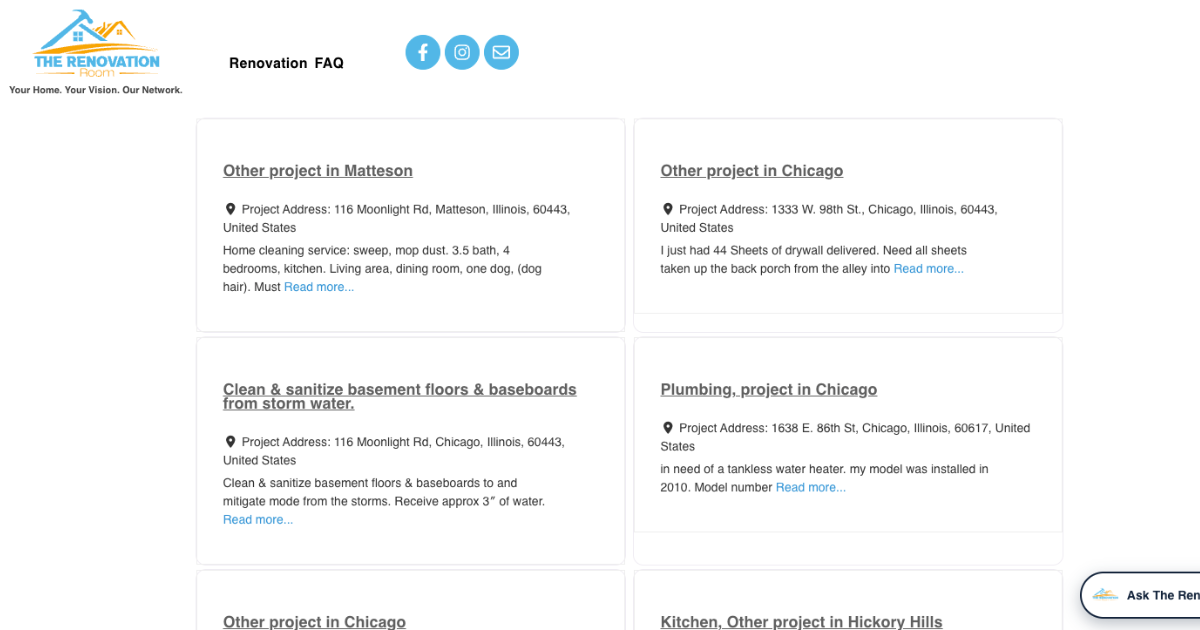
Read the full project description and confirm that the lead matches your services, service area, and availability.
Before sending a message, take time to understand what the homeowner is requesting. A quick response is important, but a thoughtful response is more valuable than a rushed message that overlooks important information.
- Start by reviewing the type of project. Determine whether it falls within the services your company regularly provides. For example, a contractor who specializes in full roof replacements may not be the best fit for a small gutter cleaning request. A general contractor may be able to coordinate several parts of a renovation, while a specialty contractor may be better suited for a focused repair.
- Next, review the project location. Confirm that the property is within your normal service area and that travel time will not make the project impractical. If you are willing to travel outside your usual area, consider whether there is a minimum project size, service fee, or travel charge that should be discussed before scheduling an appointment.
- Pay attention to the homeowner’s desired timeline. Some homeowners may need emergency service, while others may be planning a project several months in advance. Before responding, check whether your schedule can reasonably accommodate the request. It is better to communicate an honest timeline than to promise immediate availability and later reschedule.
- Look for important details such as property type, approximate size, existing damage, material preferences, budget, photos, and whether the homeowner is requesting repair, replacement, installation, or an inspection. These details can help you determine which questions still need to be answered.
- If the lead includes photos, review them closely. Photos may help you identify visible damage, access limitations, material types, or safety concerns. However, avoid making a final diagnosis based only on photos. Explain that an in-person evaluation may still be needed to confirm the condition and the correct solution.
Before responding, review your The Renovation Room profile as well. Make sure your company description, services, service areas, contact information, project photos, and other business details are accurate. Homeowners may visit your profile after reading your message, so your response and profile should provide a consistent picture of your company.
Keeping your services and service areas updated is especially important. These details help The Renovation Room connect you with project opportunities that are more relevant to your business. Accurate information also reduces the likelihood of receiving leads for work you do not perform or locations you do not serve.
Respond Quickly Without Sounding Rushed

A fast response can help you stand out, but the message should still feel thoughtful and personal.
Homeowners often begin reviewing contractors soon after posting a project. Responding while they are actively looking at their options can increase the likelihood that they read your message and continue the conversation.
This does not mean you need to provide a complete proposal immediately. Your first response should simply open the conversation and make it easy for the homeowner to respond.
A strong opening message should include your name, company name, acknowledgment of the project, and one clear next step. For example:
“Hi Sarah, this is Michael with ABC Roofing. I saw your request regarding a possible roof leak near the back of your home. We would be happy to take a closer look. Could you send a few photos of the area, including the roofline and any interior water damage?”
This response works because it directly refers to the homeowner’s concern. It also asks for specific information rather than sending a general statement such as “Call me if you still need help.”
Personalization does not require a long message. Even one sentence referring to the project can show that you read the post. Mention the specific service, problem, property type, neighborhood, timeline, or material described by the homeowner.
Avoid sending messages that sound copied, such as:
“We do all kinds of work. Call us.”
“I’m interested.”
“We can help. What’s your number?”
These responses provide very little information and may make the homeowner question whether the contractor reviewed the project.
Instead, give the homeowner a reason to reply. Ask one or two useful questions or suggest a specific action. For example, you might offer to review photos, arrange a short phone call, schedule a site visit, or provide an estimate after receiving measurements.
Your message should also be easy to read. Use complete sentences, short paragraphs, and clear wording. Avoid writing an entire message in capital letters or using excessive punctuation. Professional communication helps the homeowner feel that your company will also communicate clearly during the project.
When possible, enable notifications in The Renovation Room. Notifications can alert you when a project matches your services and service areas, allowing you to respond without repeatedly checking the project board.
After enabling notifications, confirm that your phone allows notifications from The Renovation Room. Contractors should also keep their profile details current so the platform can send alerts for the most appropriate project opportunities.
Write a Response That Builds Trust

Your first message should show professionalism, relevant experience, and a genuine understanding of the homeowner’s project.
A homeowner may know very little about your company when they receive your response. Your message should give them enough information to feel comfortable continuing the conversation.
Begin with a simple introduction. State your name and your company name. Avoid assuming that the homeowner will immediately recognize your profile.
Next, acknowledge the specific project. You can briefly summarize what you understand from the post. For example:
“I understand that you are looking to replace the damaged sections of your backyard fence and would like the new sections to match the existing style.”
This helps confirm that you and the homeowner are discussing the same work. It may also give the homeowner an opportunity to correct or clarify the request.
You can then mention relevant experience. Keep this brief and directly connected to the project. Instead of saying that your company does everything, explain why your experience is relevant.
For example:
“Our team regularly handles wood fence repairs and full fence replacements, including matching existing boards and posts when the original material is still available.”
This statement is more meaningful than a general claim such as “We are the best contractor in the area.”
Be careful not to overpromise. Avoid guarantees about cost, completion time, material availability, permits, or the final condition of the property before completing an inspection. Trust is built through honesty and realistic communication.
You may also mention useful business information, such as whether you are insured, whether estimates are available, or whether your company has experience with a certain property type. Only include information that is accurate and relevant.
End your first message with a simple question or next step. Homeowners are more likely to respond when they know exactly what information you need.
A complete first response might look like this:
“Hi David, this is James with Northside Concrete. I saw your request for a new concrete patio behind your home. We install patios, walkways, and small concrete pads throughout the area. To help us understand the project, could you share the approximate dimensions and a few photos of the area? We can then discuss the site conditions and schedule a visit if needed.”
This message introduces the contractor, refers to the project, establishes relevant experience, and clearly explains what the homeowner should do next.
Your tone should be confident but respectful. Avoid pressuring the homeowner to hire you immediately. The first goal is to establish a conversation, not to force a decision.
It is also important to avoid criticizing other contractors. Even if the homeowner describes poor workmanship, focus on the solution. You can explain what should be inspected or corrected without making assumptions about another company’s intentions or qualifications.
Keep the homeowner’s perspective in mind. Renovation and repair projects can be stressful, especially when they involve water damage, electrical problems, structural concerns, unexpected costs, or delays. A calm and helpful response can make your company feel more reliable.
Ask the Right Questions Before Discussing Price
Accurate estimates depend on accurate information, so gather the most important project details before committing to a price.
Many homeowners want to know the cost immediately. Contractors should be prepared to discuss pricing, but it is important to avoid providing a firm estimate without understanding the project.
Start with the questions that have the greatest effect on the scope and price. These may include the size of the area, current condition, materials, access, location, project timeline, and desired result.
- For a painting project, useful questions may include whether the work is interior or exterior, how many rooms are involved, approximate wall dimensions, ceiling height, current wall condition, color changes, and whether trim or ceilings are included.
- For a roofing project, you may ask about the type of roof, approximate age, visible leaks, missing shingles, storm damage, number of layers, and whether the homeowner is looking for repair or replacement.
- For a bathroom renovation, important details may include the size of the room, whether the layout will change, which fixtures are being replaced, material preferences, plumbing changes, and whether demolition is required.
Photos can answer many initial questions and help determine whether a site visit is needed. Ask the homeowner to include wide photos showing the entire area as well as close-up photos of damage or problem areas.
Do not ask every possible question in the first message. Begin with two or three important questions. Once the homeowner responds, you can request additional details.
When discussing price, explain what is included. A number without context may create confusion. Homeowners should understand whether the estimate includes labor, materials, removal, disposal, delivery, permits, preparation, cleanup, taxes, or additional services.
If the information is limited, you can provide a general range while explaining the variables. For example:
“Similar fence repairs often begin around this range, but the final cost will depend on the number of damaged posts, the condition of the existing panels, access to the yard, and whether matching materials are available.”
This approach gives the homeowner useful guidance without presenting an uncertain number as a guaranteed price.
Avoid intentionally giving an unrealistically low estimate simply to secure an appointment. If the final price is much higher, the homeowner may feel misled. Transparent pricing conversations help create better expectations and reduce disputes.
You should also be clear about estimate policies. If your company provides free estimates, explain whether that includes an on-site visit. If you charge a service call, inspection fee, consultation fee, or diagnostic fee, mention it before scheduling.
For emergency service, explain any after-hours rates or minimum service charges. Homeowners should not discover these fees after the contractor arrives.
If you cannot provide even a general price without an inspection, explain why. For example:
“Because the water damage may be coming from more than one location, we would need to inspect the roof and attic before recommending a repair or providing accurate pricing.”
This demonstrates professional judgment rather than avoiding the question.
The goal is not to provide the fastest price. The goal is to provide an accurate, understandable, and responsible estimate based on the actual project.
Guide the Homeowner Toward the Next Step
Every response should make it clear what happens next, whether that is sending photos, taking a phone call, scheduling an inspection, or receiving an estimate.
A conversation can lose momentum when neither the contractor nor the homeowner knows what to do next. Make the process simple by suggesting one clear action.
For smaller projects, photos and measurements may be enough to provide preliminary pricing. For larger or more complicated projects, a phone call or site visit may be necessary.
When offering a phone call, provide a reasonable time window rather than asking the homeowner to call whenever they are available. For example:
“I am available today between 3:00 and 5:00 p.m. or tomorrow morning between 9:00 and 11:00 a.m. for a quick call. Would either time work for you?”
When scheduling a site visit, confirm the property address, date, arrival window, homeowner’s phone number, and whether someone needs to be present. Ask about parking, gates, pets, locked areas, tenants, alarms, or access instructions when relevant.
If another person will complete the visit, provide their name when possible. The homeowner should know who to expect.
After scheduling, send a brief confirmation message. Include the date, time window, address, purpose of the visit, and any preparation required. For example, you may ask the homeowner to clear items from a work area, provide access to an electrical panel, unlock a gate, or ensure that pets are secured.
During the site visit, arrive within the agreed window or notify the homeowner as soon as possible if there is a delay. Communication before the project begins is often viewed as an indication of how communication will be handled throughout the job.
After the inspection, explain when the homeowner can expect the estimate. Avoid saying “soon” if you can provide a more specific timeframe. For example, tell them that the estimate will be sent by the end of the next business day or within two business days.
The estimate should be organized and easy to understand. Include the scope of work, major materials, exclusions, pricing, payment schedule, estimated timeline, warranty information, and how changes will be handled.
If the homeowner has not provided enough information to schedule an appointment, repeat the specific details you need. A message such as “Let me know” is less effective than “Please send the property address and two photos of the damaged area so we can determine the next step.”
Professional guidance is especially valuable for homeowners who are unfamiliar with renovation projects. Explain the process without talking down to them. A homeowner may not know the correct technical terms, but they can still describe what they are seeing and what result they want.
Your role is to translate that information into a practical next step.
Follow Up Professionally and Continue Building the Relationship

A thoughtful follow-up can restart the conversation, but repeated pressure may cause the homeowner to disengage.
Not every homeowner will respond to the first message. They may be working, reviewing several contractors, waiting for another decision-maker, gathering funds, checking insurance coverage, or reconsidering the project timeline.
A follow-up message should be brief, polite, and useful. Instead of simply asking whether they saw your message, remind them what information or service you can provide.
For example:
“Hi Karen, I wanted to follow up regarding your kitchen flooring project. We would still be happy to review the photos and measurements when you are ready. Once we have those details, we can advise whether an on-site visit is needed.”
This message provides context and explains the next step without pressuring the homeowner.
A second follow-up may be appropriate several days later, especially if the project appears urgent or the homeowner previously expressed interest. After that, it may be best to leave the conversation open unless the homeowner responds.
Avoid sending repeated daily messages. Too many messages may feel aggressive and can damage trust before the project begins.
If the homeowner tells you that they hired someone else, respond professionally. Thank them for the update and let them know they can contact you for future projects. A respectful response may lead to another opportunity later.
If the homeowner delays the project, ask whether they would like to reconnect at a later date. Make a note of the expected timeframe so you do not follow up too early.
When a homeowner accepts your estimate, continue communicating clearly. Confirm the scope, deposit, schedule, materials, access requirements, and any decisions that still need to be made.
During the project, provide updates when there are changes to the schedule, materials, price, or scope. Do not wait until the end of the project to explain an unexpected issue.
After completing the work, confirm that the homeowner has had an opportunity to review the results. Address reasonable questions promptly and provide any warranty, care, maintenance, or final payment information.
A project lead should not be viewed as a single message or one-time transaction. It is the beginning of a potential customer relationship. Even if the first project is small, a positive experience may lead to future work, referrals, reviews, and long-term trust.
Contractors should also review their lead response process regularly. Consider tracking how quickly you respond, which messages receive replies, how many conversations lead to appointments, and how many appointments become approved projects.
If certain leads regularly do not fit your business, update your services and service areas in The Renovation Room. If notifications are arriving late or being missed, review your app and phone notification settings.
Small improvements in communication can make a significant difference over time.
Conclusion
Responding to project leads is an important part of growing a contracting business. Homeowners are not only looking for someone who can complete the work. They are also looking for someone who communicates clearly, understands their concerns, provides realistic information, and makes the renovation process easier to navigate.
The best responses begin with careful review. Confirm that the project matches your services, location, experience, and schedule. Respond promptly, but take enough time to personalize the message and acknowledge the homeowner’s specific request.
Introduce yourself and your company, explain your relevant experience, and ask only the most important initial questions. Do not provide a firm price until you understand the scope of the project. When discussing costs, explain the factors that may affect pricing and clearly state what is included.
Every message should guide the homeowner toward a clear next step. This may be sending photos, providing measurements, scheduling a call, arranging a site visit, or reviewing a written estimate.
When a homeowner does not respond immediately, follow up politely and avoid excessive messaging. Whether or not the lead becomes a project, professional communication can strengthen your reputation and create future opportunities.
Finally, keep your The Renovation Room profile accurate. Update your services, service areas, contact details, and business information so that homeowners can better understand what your company provides. Enable project lead notifications so you can respond while homeowners are actively looking for assistance.
A good response does more than say that you are available. It demonstrates that you are prepared, attentive, experienced, and ready to help the homeowner move forward with confidence.
Frequently Asked Questions
1. How quickly should contractors respond to a project lead?
Contractors should respond as soon as reasonably possible while still taking time to review the project. A prompt response can increase the chance that the homeowner sees your message while actively comparing contractors. However, the message should still be personalized and professional.
2. What should be included in the first response?
The first response should include your name, company name, acknowledgment of the specific project, a brief explanation of relevant experience, and one clear question or next step. It does not need to include a full proposal.
3. Should I provide a price in my first message?
Provide pricing only when you have enough information to do so responsibly. For many renovation and repair projects, photos, measurements, a phone call, or an on-site inspection may be needed. You can provide a general range if you clearly explain the factors that may change the final price.
4. What questions should I ask the homeowner?
Ask questions that help clarify the project scope, such as the property location, approximate size, current condition, desired outcome, material preferences, timeline, access, and whether photos are available. Begin with the most important questions rather than sending a long questionnaire.
5. What should I do if the project is outside my service area?
Let the homeowner know politely that the property is outside your normal service area. If you accept projects outside your area under certain conditions, explain any travel fees, minimum project requirements, or scheduling limitations before arranging a visit.